
TechfoAnalyzer
18 August 2026
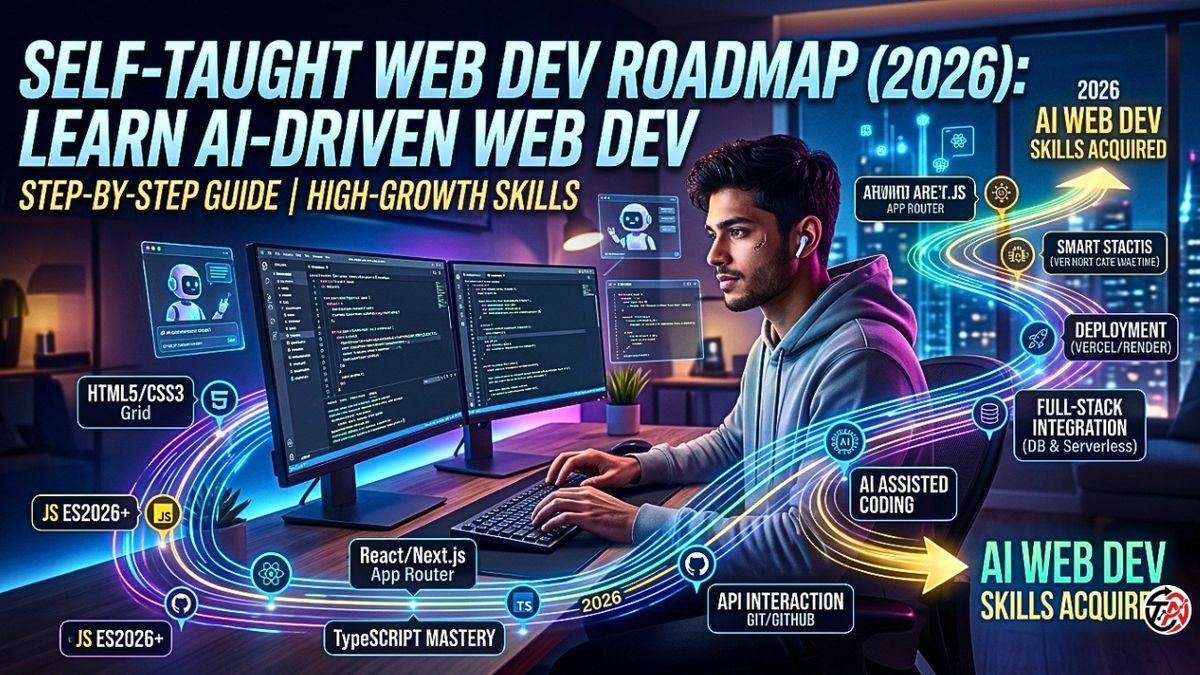
Bootcamps are dead. They are selling a 2018 playbook in a 2026 market, burning students for $15,000 just to teach them how to center a div and copy syntax that a $20-a-month LLM can spit out in three seconds flat.
Why waste six months memorizing syntax when an algorithm writes it instantly?
If you want to survive as a self-taught developer today, you have to stop acting like a human code compiler—and start operating like a software architect orchestrating digital labor.
Why Bootcamps Are Dead
Bootcamps were built on a predatory model: cram basic syntax into your head, force-feed you a generic MERN-stack clone project, and promise a $90,000 junior role. That market is completely extinct. AI killed the need for junior boilerplate typists—and frankly, good riddance. Paying a bootcamp to learn syntax today is financial suicide when LLMs explain entire code bases in real time for free.
The Shift to Software Architect
Stop trying to memorize syntax.
Your value is no longer measured in lines of written code—it’s measured in system stability, data integrity, and architectural decisions. You aren't a manual laborer digging ditches anymore—you're the site manager inspecting the foundation to ensure the building doesn't collapse under real-world load.
Semantic HTML5
Div soup is a sign of an amateur. Blindly stacking generic <div> tags breaks accessibility for screen readers, tanks SEO, and turns your DOM tree into an unmaintainable nightmare. Learn proper document structure (<main>, <section>, <article>, <nav>) so the browser—and search engine crawlers—actually understand your application logic.
Modern CSS
Forget old-school CSS floats or massive stylesheet bloat. Master layout engine logic instead:
Flexbox
One-dimensional alignment. Stacking items in a single row or column.
CSS Grid
Two-dimensional layout control. Row and column orchestration simultaneously.
Tailwind CSS
Learn utility-first styling—it keeps styles scoped, kills stylesheet bloat, and speeds up UI builds by letting you style elements directly inside your markup using predictable design constraints.
JavaScript (ES6+)
JavaScript isn't optional—it’s the engine running the web. Skip the fluff and hit the hard parts first:
Asynchronous JS
Understand how the Event Loop handles non-blocking tasks so you don't freeze the main thread.
Promises & Async/Await
Clean asynchronous execution without trapping yourself in callback hell.
DOM Manipulation
Know how the browser builds and updates the node tree natively before relying on heavy frameworks.
Array Methods
Master .map(), .filter(), and .reduce(). If you can't manipulate complex JSON arrays effortlessly, you can't build modern web applications.
Git & GitHub
If your code isn't version-controlled, it doesn't exist. Master terminal Git (git commit, git rebase, git checkout -b). Learn how branching strategies work in real engineering teams, how to handle merge conflicts without panicking, and how to publish public pull requests on GitHub.
AI Coding Assistants
Tools like Cursor, Copilot, and Claude are your dynamic workforce. Use them to draft boilerplate, write test cases, and explain legacy logic. But treat them like eager interns—fast, helpful, but completely prone to making up plausible-sounding nonsense if left unsupervised.
Prompt Engineering for Devs
Vague inputs yield total garbage. Prompting is technical specification writing.
Tell the model your exact runtime version, structural constraints, database schema, and edge-case exceptions. "Write a contact form" gets you broken code; "Write a React Hook Form client module using TypeScript, Zod validation, and Next.js App Router server actions" gets you production-grade software.
Code Auditing & Code Reading
The most dangerous thing a beginner can do is copy-paste AI responses without understanding them. AI models routinely hallucinate non-existent packages, introduce subtle cross-site scripting bugs, or write inefficient, memory-leaking loops. Your primary job is line-by-line code auditing—verifying security, types, and performance before anything hits production.
TypeScript
Plain JavaScript in production is an extreme liability. TypeScript forces you to define strict contracts for your data, catching breaking bugs at compile time instead of letting your users find them in production:
Strict Typing
Stop using any. Explicitly annotate function parameters and return shapes.
Interfaces & Types
Model complex domain objects so your editor flags mismatched properties instantly.
Generics
Build flexible, reusable utility functions that preserve exact type safety across different data structures.
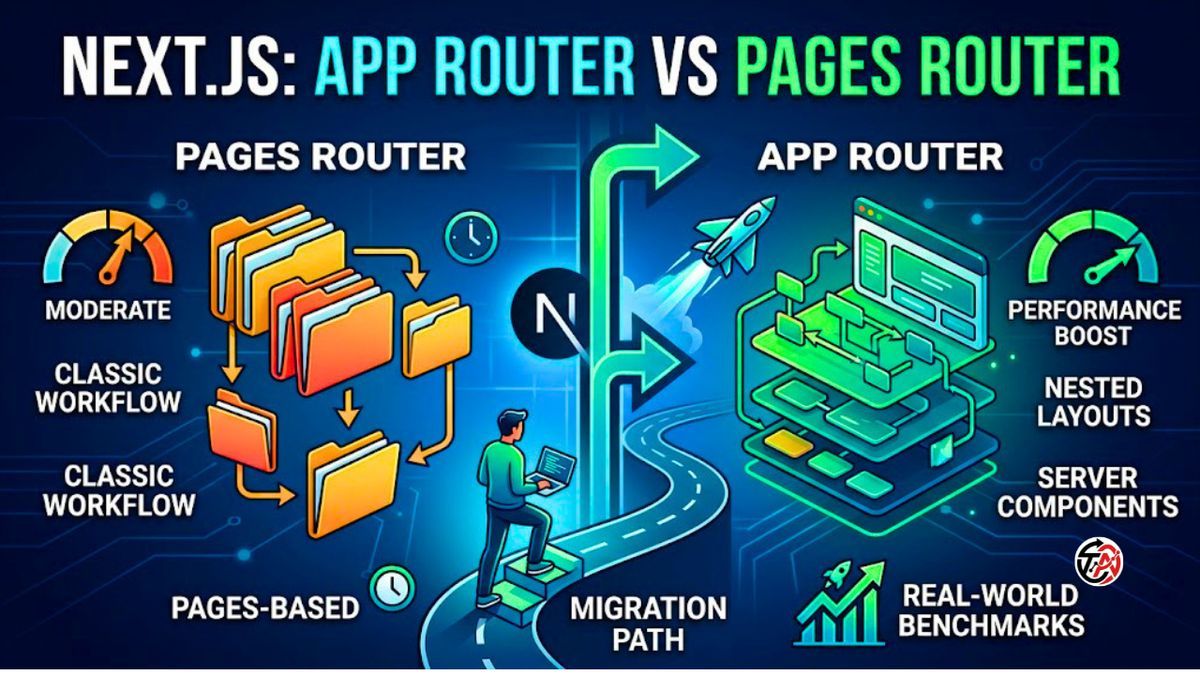
React & Next.js (App Router)
React is the industry UI default, but Next.js is how you build real-world, performant production applications:
Server Components
Shift heavy rendering and data fetching to the server to drastically cut down JavaScript execution on the client's device.
Dynamic Routing
Structure scalable app architectures using directory-based routing (app/dashboard/[id]/page.tsx).
State Management
Keep simple local state in React, and use lightweight tools like Zustand for complex, cross-component application state. Avoid over-engineering with bloated state managers unless absolutely required.
Form & State Validation
Never trust client input—ever. Pair Zod schema definitions with React Hook Form. This lets you validate user input instantly on the client side, enforce strict runtime type checking, and sync those exact types with your backend APIs automatically.
Node.js & Express / Modern Runtimes
Build actual backend architecture, not just UI frontends:
API Routing
Build secure, predictable RESTful routes to manage resource state.
Middleware
Intercept requests for route protection, payload validation, and request logging.
Authentication
Ditch insecure local-storage tokens. Implement real session management using HTTP-only, Secure, SameSite cookies carrying JSON Web Tokens (JWTs).
Database Architecture
| Strategy | NoSQL (MongoDB) | Relational (PostgreSQL + Prisma) |
|---|---|---|
| Data Integrity | Flexible schema; high risk of data inconsistency if unmanaged | Strict constraints; rigid tables and explicit foreign keys |
| Best Use Case | Unstructured data, rapid feature iteration | Financial records, relational models, transactional integrity |
| Query Engine | Document aggregations | Strongly typed SQL / Prisma ORM queries |
Third-Party Integrations
Real applications don't live in isolation—they rely on API ecosystems. Connect payment infrastructure with Stripe, transactional email delivery using Resend, and secure external communications via REST or GraphQL APIs.
Security Essentials
Security isn't a feature you patch on at the end—it's a baseline requirement:
Input Sanitization
Validate and sanitize every input string to block SQL Injection and Cross-Site Scripting (XSS).
CORS & CSRF
Restrict resource access strictly to authorized origins and protect mutation endpoints with Anti-CSRF measures.
Environment Variables
Keep secrets, database connection strings, and private API keys locked inside runtime .env files. Never commit credentials to public repositories.
Deployment Pipelines
Deploying isn't drag-and-dropping files onto an FTP server. Ship applications using cloud platforms like Vercel, Railway, or Render. Set up automated continuous integration and deployment (CI/CD) pipelines so every git push runs tests, builds assets, and deploys without downtime.
Domain & DNS Management
Understand basic internet networking to get your apps online correctly:
A Records & CNAMEs
Route custom domain traffic directly to your deployment servers or cloud edge networks.
SSL/TLS
Force encrypted HTTPS connections across your entire site.
Email Records
Configure SPF, DKIM, and DMARC DNS records so transactional emails from your platform don't get blocked by spam filters.
Building "AI-Enhanced" Full-Stack Projects
Stop building to-do lists, weather apps, and basic clones. Recruiters instantly discard them.
Build 2 or 3 hyper-focused, deployed SaaS applications that solve actual business problems. Integrate payment processing, role-based access control, background workers, and AI capabilities to prove you can deliver real business value.
Open Source & Personal Branding
If nobody knows what you build, you don't exist. Document your engineering decisions publicly. Write technical post-mortems explaining why you chose PostgreSQL over MongoDB, push clean code to public GitHub repositories, and share architectural breakdowns on LinkedIn to show hiring managers how you think.
Recruiter Outreach Strategy
Cut out the fluff when reaching out to engineering leads. Don't pitch your passion—pitch your utility.
"Hi [Name], I saw your team is scaling its Next.js frontend. I built a full-stack analytics dashboard using TypeScript, Prisma, and PostgreSQL that processes real-time event queues with sub-200ms latency. I'd love to drop the live demo and repo link here if you're open to taking a quick look."