
TechfoAnalyzer
30 July 2026
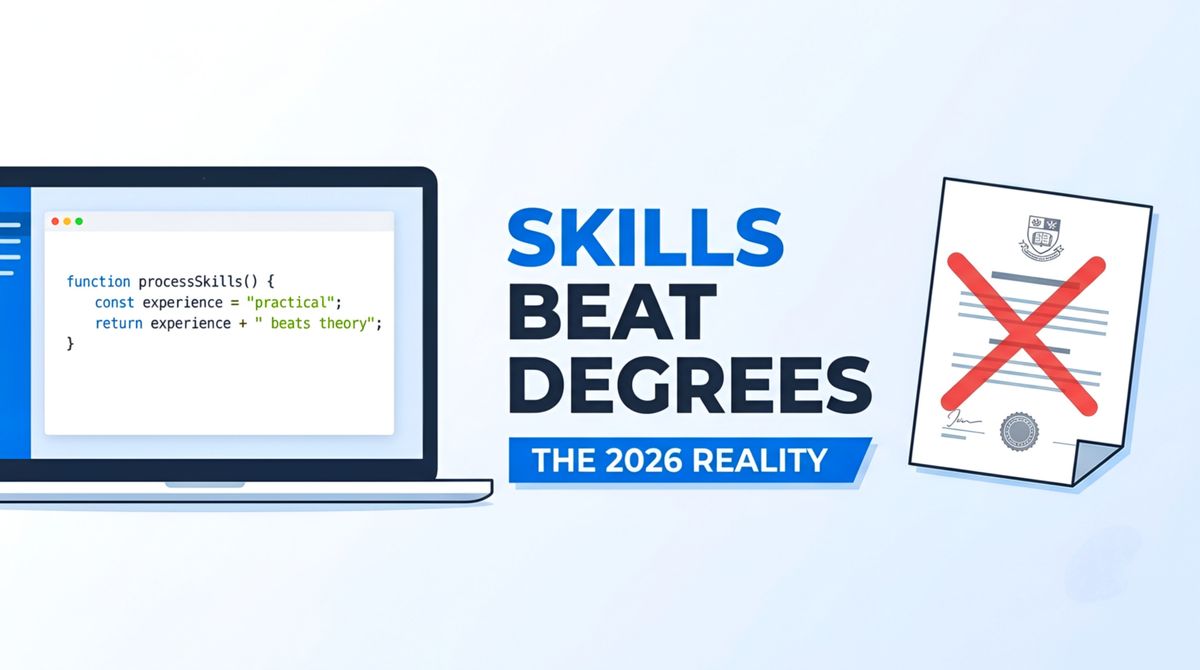
Universities sell a $100,000 piece of paper wrapped in campus nostalgia. Tech companies sell software. The dirty secret of software engineering?
No computer science professor is waking up at 2 AM to fix your broken production server—and tech recruiters know it.
If you can write clean code, optimize database queries, and ship functional products under pressure, nobody gives a damn where you sat for lectures. The traditional CS degree is an expensive, slow-moving bottleneck designed for a 1990s world that no longer exists.
Code Beats Credentials
Engineering managers care about shipping features, not your university's prestige.
Proof Over Promises
Three deployed, complex applications outvalue four years of theoretical textbook reading every single time.
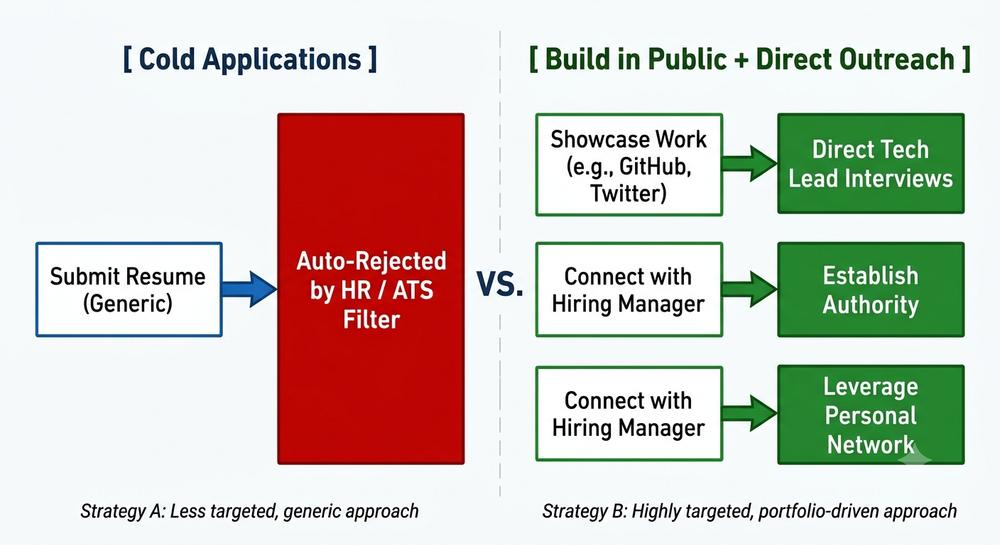
Bypass Automated HR
Cold outreach and public code repositories bypass broken applicant tracking systems that filter out talent.
Entry Ports Exist
Frontend work, web maintenance, and QA automation offer immediate entry points into software engineering.
Yes—and doing it without a degree often turns you into a sharper developer anyway. Why? Because you learned in the trenches of real execution rather than inside an insulated, theoretical lecture hall.
Stop applying for generic "Software Engineer III" roles at bloated corporations through broken job portals. That is a loser's game. Target jobs where your direct output is immediately visible to the people who actually sign the checks:
Junior Frontend Developer
You build interfaces, manage complex application state, and connect UI components to APIs. If it looks clean and runs fast, you win.
Web Maintenance & CMS Developer
Agencies constantly panic over broken client sites. If you can jump into Next.js, WordPress, or Webflow to fix performance bottlenecks and layout bugs, you become indispensable overnight.
Junior QA / Automation Tester
Writing test scripts to break bad code is hands-down the fastest way to learn how good architecture works from the inside out.
Email / HTML Specialist
Constructing robust, responsive HTML emails sounds simple—until you realize Outlook renders code like it's 1999. It teaches you extreme layout constraints fast.
Let's talk cold, hard numbers.
Expect $55,000 to $80,000 for your first junior role in Western markets or remote equivalents. Once you hit two years of shipped production code? That number easily jumps past $100,000+.
Getting your first job without a degree is an absolute dogfight because stupid HR algorithms prioritize keyword matches over actual talent. But the second you cross 12 months of commercial experience, your degree status completely disappears from the conversation forever.
Pick a stack. Master the execution. Stop jumping between shiny new frameworks every three weeks just because tech influencers told you to.
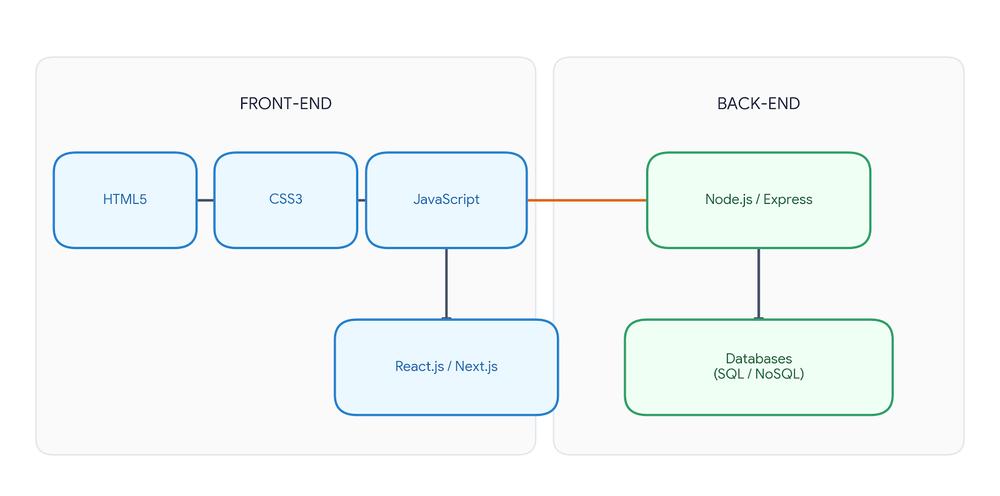
Choose Your Path & Tech Stack
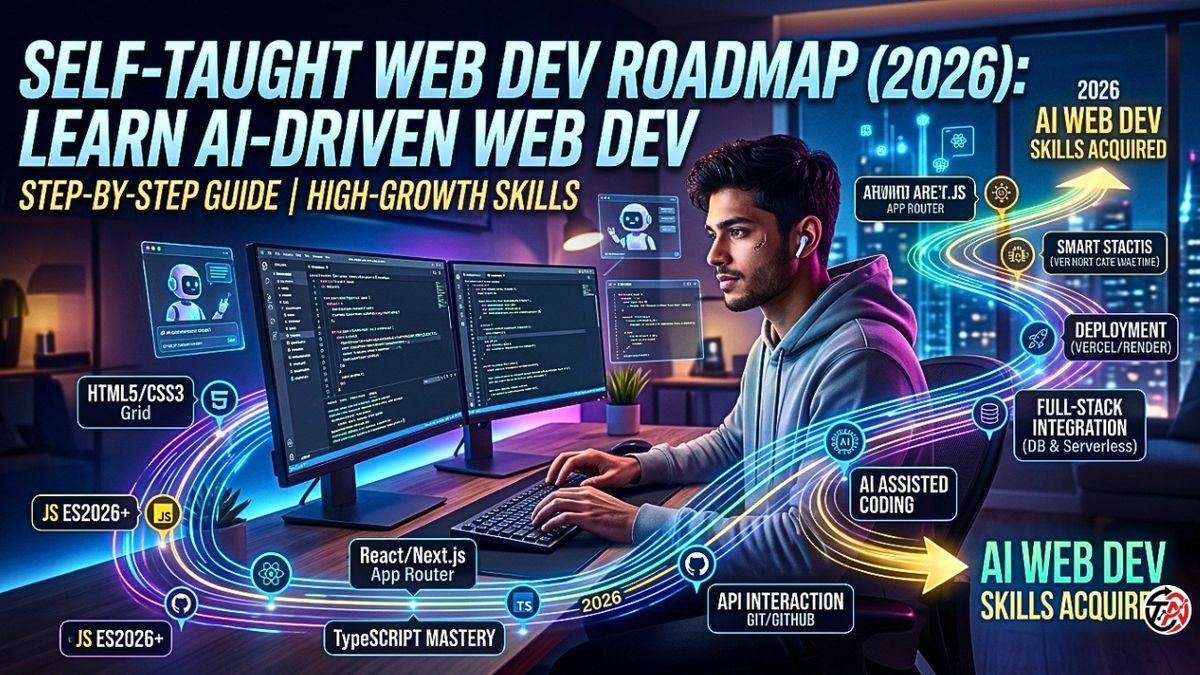
HTML5 & CSS3
Semantic structure and modern layouts (Flexbox, Grid). If your site breaks on mobile devices in 2026, you failed the absolute basics.
JavaScript (ES6+)
Master asynchronous code, DOM manipulation, state management, and API integration. JavaScript powers the modern web—period.
React / Next.js
Once plain JavaScript makes sense, build with React. Next.js gives you server-side rendering, file-based routing, and backend API routes right out of the box.
Node.js & Express
The logical extension for JavaScript developers—it lets you write server logic and handle routing in the exact same language you use for the interface.
Databases (PostgreSQL / MongoDB)
Learn how data actually lives. Master relational schemas in SQL and flexible document models in NoSQL without bringing your server to a crawl.
Git & GitHub
Version control isn't optional. If your code isn't versioned, tracked, and pushed to GitHub, it does not exist.
Browser DevTools
Master the Network tab, memory profiling, and breakpoints—professional developers spend far more time debugging than writing fresh code.
Your portfolio isn't a collection of homework assignments—it's your visual resume.
Tutorial projects—like a basic To-Do list or a cheap Netflix clone—signal one thing to a hiring manager: you know how to copy a YouTube video step-by-step. They ignore them completely.
Build three distinct, production-ready applications instead
Full-Auth CRUD Application
A complex system featuring real database schemas, role-based security, and custom user authentication.
API-Driven Application
A tool that interfaces with real-world payment systems like Stripe, external data pipelines, or real-time web sockets.
A Real Business Solution
Build something that solves an actual operational bottleneck for a local business, non-profit, or your own SaaS idea.
Deploy everything live on platforms like Vercel, Netlify, or Railway. If a hiring manager can't click a live link and test your application in 5 seconds flat, you've already lost them.
Green Graphs Matter
A steady stream of commits proves discipline and daily coding habits.
Fix Public Code
Jump into open-source repositories on GitHub. Fix broken documentation, patch minor bugs, or write test suites—showing you can read someone else's messy codebase and submit a clean pull request is an instant hire signal.
When your resume doesn't match the traditional HR template, stop using traditional HR channels. It's that simple.
Ruthless LinkedIn Optimization
Strip out the fluffy buzzwords. Your headline should state your exact tech stack: "Full-Stack Developer | React, Next.js, Node.js, PostgreSQL". Pin live video demos of your apps directly to your profile.
Ship in Public on X & LinkedIn
Post 30-second screen recordings of UI components you built, database query optimizations you ran, or brutal bugs you crushed. Build an audience of developers who see your daily output.
Skip HR, Message Tech Leads
Identify Engineering Managers or CTOs at mid-sized companies. Send a short, direct message that cuts straight through the noise
"Hey [Your Name], I built a live full-stack app in Next.js that handles real-time payments and dynamic data processing. Here is a 30-second video of it working: [Your Link]. I noticed your team is scaling your web platform—let me know if you need a developer who ships production code on day one."
Freelancing (Upwork / Direct Outreach)
Fixing real site issues for paying clients gives you immediate commercial experience and ruthless client feedback.
Local Business Modernization
Walk into local businesses with broken, slow websites. Build them a modern, blazing-fast site for a fair price—you gain real portfolio pieces and client testimonials simultaneously.
Apprenticeships
Target tech companies running non-traditional hiring programs explicitly looking for self-taught builders over CS grads.
Why spend $15,000 on a coding bootcamp when the world's best engineering resources are indexed online for free?
| Platform | Core Strength | Strategic Purpose |
|---|---|---|
| FreeCodeCamp | Interactive Browser Exercises | Build fundamental syntax habits across HTML, CSS, and JS without setup friction. |
| The Odin Project | Deep Full-Stack Curriculum | Teaches real local dev setups, command line, Git, and full-stack execution from scratch. |
| YouTube | Target Feature Tutorials | Great for specific architecture walkthroughs, system design, and framework crash courses. |
| MDN Web Docs | Official Web Standard Docs | The ultimate ground-truth reference manual for JavaScript and web APIs. |
Self-taught web development isn't a magical shortcut—it's a trade execution path that requires relentless focus.
Pick One Path Today
Put down the framework comparison articles. Start The Odin Project or FreeCodeCamp right now and stick to it.
Code Without Tutorials
For every single hour of video tutorials you watch, spend three hours breaking and building code on your local machine.
Deploy Early
Ship your first broken project to Vercel within 30 days. Polish it in public.
Bypass the Gatekeepers
Document your build process, message engineering leads directly, and let your running code do all the talking for you.